Why Accomplished American Professionals Keep Returning to Istanbul for Companionship
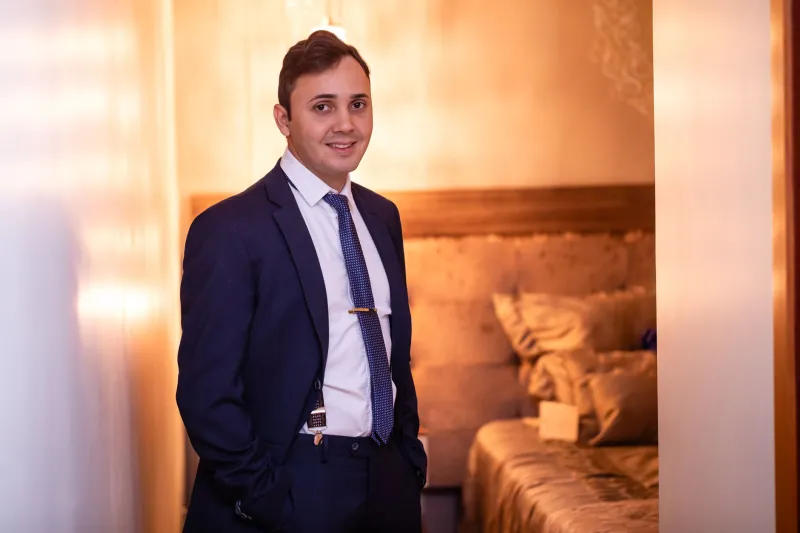
There is a certain kind of American traveler who arrives in Istanbul on a Tuesday for a conference, extends their stay through the weekend without explanation, and returns home quieter, more centered, and already planning the next trip. These are not restless wanderers or impulsive tourists. They are executives, entrepreneurs, attorneys, and physicians — individuals who have, by most conventional measures, built the lives they were supposed to want. And yet Istanbul, with its ancient skyline and layered cultural identity, offers something that their domestic routines simply cannot replicate.
Understanding why accomplished professionals gravitate toward Istanbul's companionship scene requires looking beyond surface-level assumptions. The answer lies in a convergence of psychology, lifestyle, and cultural context that is worth examining honestly.
The Weight of Visibility at Home
For many high-achieving Americans, domestic life carries an invisible tax: the cost of being known. A CEO in Chicago or a partner at a law firm in Atlanta operates within a web of professional relationships, social obligations, and reputational considerations that extend into nearly every corner of their personal lives. Discretion is not merely preferred — it is essential.
Istanbul offers something genuinely rare: anonymity without isolation. The city is cosmopolitan enough to absorb international visitors without scrutiny, yet intimate enough in its hospitality traditions to make a traveler feel genuinely welcomed. For someone accustomed to being recognized at their local restaurant or monitored in the periphery of their social circle, the freedom to simply exist without professional identity is itself a form of relief.
Companionship services in Istanbul have developed, over time, a sophisticated understanding of this dynamic. Discretion is not an afterthought — it is a foundational expectation built into how reputable providers operate. For American professionals already conditioned to value confidentiality in their business dealings, this alignment of values feels natural and trustworthy.
Cultural Novelty as a Genuine Draw
American culture, for all its diversity, operates within recognizable social scripts. Dating, romance, and companionship at home tend to follow patterns shaped by shared cultural assumptions — about gender roles, ambition, communication styles, and what connection is supposed to look like. For someone who has navigated these scripts for decades, the experience can feel somewhat predetermined.
Istanbul disrupts those scripts in ways that are intellectually and emotionally engaging. Turkish culture blends Eastern and Western influences in ways that produce genuinely distinct social dynamics. Warmth and formality coexist. Conversation carries different rhythms. The expectations around hospitality, attention, and presence differ meaningfully from what most Americans encounter at home.
For the professionally accomplished traveler — someone who has built a career on reading rooms, understanding people, and adapting to new environments — this novelty is not disorienting. It is stimulating. Cross-cultural companionship becomes a form of engagement that exercises skills they already possess, while offering experiences that feel genuinely fresh.
The Travel Context as a Psychological Container
There is a well-documented phenomenon in behavioral psychology sometimes referred to as the "travel self" — the version of a person that emerges when removed from their habitual environment. Travel suspends routine, loosens habitual self-monitoring, and creates permission for a different quality of presence. This is not recklessness. It is, for many, a form of psychological restoration.
Istanbul, positioned at the crossroads of Europe and Asia, has historically functioned as a liminal space — a place where categories blur and transitions occur. For American professionals, the city seems to activate this quality deliberately. The business trip becomes an opportunity for a different kind of engagement. The conference schedule creates structure, while the evenings remain open for connection on one's own terms.
Companionship services in this context serve a specific and legitimate function: they provide a reliable, structured way to access genuine human connection within the constraints of a travel schedule. There are no ambiguous social dynamics to navigate, no professional complications to manage, and no expectations that extend beyond the agreed-upon encounter. For someone whose domestic life is defined by complexity, that clarity is genuinely appealing.
What Distinguishes Istanbul from Domestic Alternatives
American cities offer their own companionship markets, of course. But professionals who have explored both contexts frequently describe Istanbul as qualitatively different in ways that matter. The difference is not simply about geography — it is about the overall experience architecture.
In Istanbul, the companionship encounter is more likely to be embedded in a broader cultural experience. A reputable companion may speak multiple languages, possess genuine knowledge of the city's history and arts scene, and approach the engagement with a level of sophistication that reflects Istanbul's cosmopolitan character. The interaction is less transactional in texture, even when it is professional in structure.
Additionally, Istanbul's hospitality culture — rooted in centuries of tradition around welcoming guests — infuses even commercial interactions with a warmth that many American visitors find unexpectedly affecting. The Turkish concept of "misafirperverlik," or generous hospitality toward guests, shapes social norms in ways that translate into how companionship services present themselves and operate.
Professionalism Recognizes Professionalism
Perhaps the most underappreciated dimension of this dynamic is simple professional recognition. Accomplished Americans are accustomed to engaging with other professionals — people who take their work seriously, maintain high standards, and deliver on commitments. When they encounter companionship providers in Istanbul who operate with equivalent professionalism, the interaction registers as credible and worthy of respect.
This is not a minor point. Trust, for a high-achieving professional, is built on demonstrated competence and reliability. Istanbul's more established companionship services have cultivated reputations over time precisely because they understand this. The American professional traveler is not looking for a casual encounter — they are looking for a well-managed experience delivered by someone who understands the value of their time and the importance of their privacy.
Istanbul, in this regard, has quietly become one of the more sophisticated destinations in the world for exactly this kind of traveler. The city rewards those who approach it with intention — and for successful American professionals, intention is rarely in short supply.