The Art of Connection: How Turkish Hospitality Traditions Redefine Companionship for American Visitors
There is a Turkish proverb — misafir on dakika bekler, ev sahibi on yıl — that translates roughly as: "A guest waits ten minutes; a host prepares for ten years." This single phrase captures something essential about the Turkish relationship with hospitality. It is not a courtesy extended when convenient. It is a moral obligation, a point of personal pride, and a cultural inheritance passed across generations.
For American visitors arriving in Istanbul with expectations shaped by Western service industries, this distinction matters enormously. The companionship experience in Istanbul is not simply a transaction with an exotic backdrop. It is, at its best, an encounter shaped by one of the world's most sophisticated hospitality philosophies. Understanding that philosophy will not only make you a more considerate guest — it will make every interaction you have in this city richer and more rewarding.
Hospitality as Identity, Not Industry
In the United States, hospitality is largely understood as a professional sector — hotels, restaurants, customer service. It is something delivered by workers to consumers within a defined commercial relationship. Warmth is valued, of course, but it operates within a transactional framework that both parties understand and accept.
In Turkey, the concept of misafirperverlik — hospitality — exists at a different register entirely. It is considered a reflection of one's character, family values, and community standing. To be inhospitable is not merely impolite; it is a form of moral failure. This cultural weight means that when a Turkish person extends warmth, attention, or care toward a guest, they are expressing something genuine about who they are — not simply fulfilling a job description.
This distinction has a direct bearing on how companionship professionals in Istanbul approach their work. Many see themselves as hosts in the fullest cultural sense: people responsible for ensuring that a visitor feels welcomed, respected, and genuinely cared for during their time in the city. The service dimension is real, but it coexists with an authenticity that many American visitors find unexpectedly moving.
The Significance of Slowness
Americans tend to operate at a pace that prioritizes efficiency. We value directness, punctuality, and getting to the point. These are admirable qualities in many contexts, but they can work against you in Istanbul if you allow them to dominate your approach to human connection.
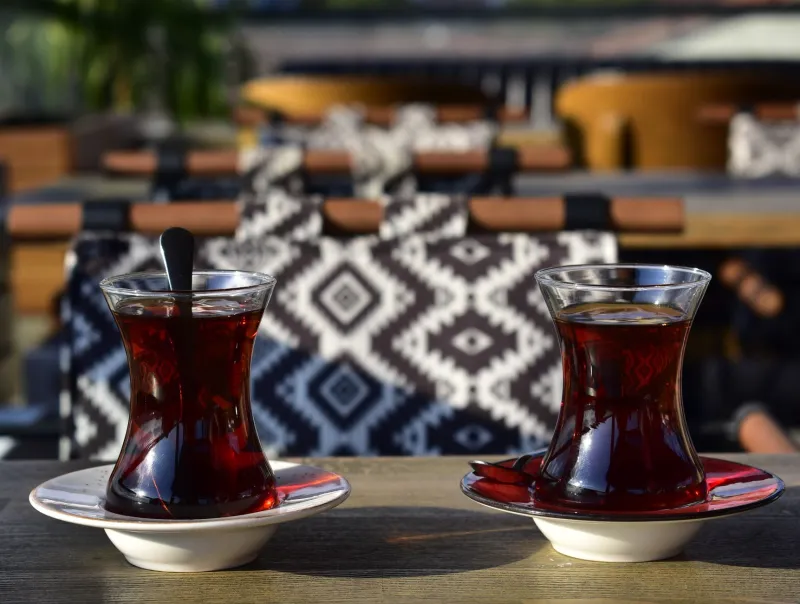
Turkish social culture is built around the art of unhurried engagement. The ritual of tea — offered freely, refilled without being asked, never rushed — is not incidental to Turkish social life. It is Turkish social life, distilled into a small glass. The same spirit permeates how Turks approach conversation, dining, and interpersonal connection. There is an expectation that meaningful relationships, even brief ones, deserve time and attention.
For American visitors seeking companionship in Istanbul, this means recalibrating your internal clock. Arriving at a meeting with an agenda and a tight timeline signals, however unintentionally, that you view the encounter as a transaction to be completed rather than an experience to be shared. Allowing conversations to breathe, showing genuine curiosity about your companion's perspective, and resisting the impulse to rush toward the "point" of the interaction will consistently yield better, warmer, more authentic experiences.
Respect, Reciprocity, and the Unspoken Contract
Turkish culture places considerable emphasis on mutual respect — not as an abstract value, but as a set of observable behaviors that signal your awareness of and regard for the person in front of you. In the context of companionship, this translates into a few practical principles worth internalizing.
Acknowledge the person, not just the service. Turkish companions, like all professionals, are whole human beings with histories, preferences, and perspectives. Taking a moment to ask a genuine question — about the city, about a neighborhood you've visited, about something you noticed during your time in Istanbul — communicates that you see them as a person. This acknowledgment is not merely polite; in Turkish cultural terms, it is foundational to any meaningful interaction.
Observe the protocols of greeting. Istanbul is a cosmopolitan city, and its residents are accustomed to international visitors. Nevertheless, a degree of formality in initial greetings — a respectful tone, appropriate eye contact, unhurried introductions — sets a positive foundation. Rushing past pleasantries in pursuit of the evening's agenda reads as disrespectful in a cultural context that treats the greeting ritual as genuinely important.
Honor your commitments. Reliability is a deeply respected quality in Turkish culture. Canceling last-minute, arriving significantly late without communication, or renegotiating agreed terms upon arrival are all behaviors that will be received far more negatively here than they might be in a more transactional Western context. Your word, in Istanbul, carries real cultural weight.
What Genuine Connection Looks Like Here
One of the most frequently reported surprises among American visitors to Istanbul's companionship scene is the degree to which interactions can feel genuinely warm rather than performative. This is not accidental. It reflects the cultural conditioning described above — the sense that a host's role is to make a guest feel truly valued, not merely serviced.
This warmth, however, functions best when it is reciprocated. Turkish hospitality is not unconditional; it is a dynamic exchange. When visitors respond to genuine warmth with appreciation, curiosity, and respectful engagement, the quality of the interaction elevates for everyone involved. When visitors treat warmth as a feature of a product they've purchased, the cultural circuit breaks, and what could have been a memorable human encounter becomes something considerably more ordinary.
The most meaningful experiences American visitors report from Istanbul share a common thread: they arrived with openness, adjusted their pace, showed genuine interest in the person before them, and allowed the encounter to unfold on its own terms rather than forcing it into a familiar Western template.
Bringing It Home
Istanbul is not simply a destination. It is an education in a different way of being present with other people. Its hospitality traditions, refined over centuries at the crossroads of continents and cultures, offer American visitors something genuinely rare: a model of human connection that prioritizes depth over speed, warmth over efficiency, and mutual regard over transactional completion.
Approach your time here with that understanding, and the city — and every companion you encounter within it — will offer you far more than you came looking for.